No. 46: The Soft Labor Questionnaire: Rachel Meade Smith
Welcome to Soft Labor, the namesake publication of Soft Labor, a strategic consultancy for organizations, designers, and the culture industry led by Sarah Hromack-Chan. Soft Labor is a publication about creative labor—what it is, what it looks like, and how it has and will continue to change. Did someone forward you this publication? Subscribe, read our archives, or email us at info@softlabor.biz.
The Soft Labor Questionnaire, is simply that: A brief series of questions we’ve asked comrades in the field to answer about their own working experiences. Would you like to respond to the Soft Labor Questionnaire? Go right ahead and do so.
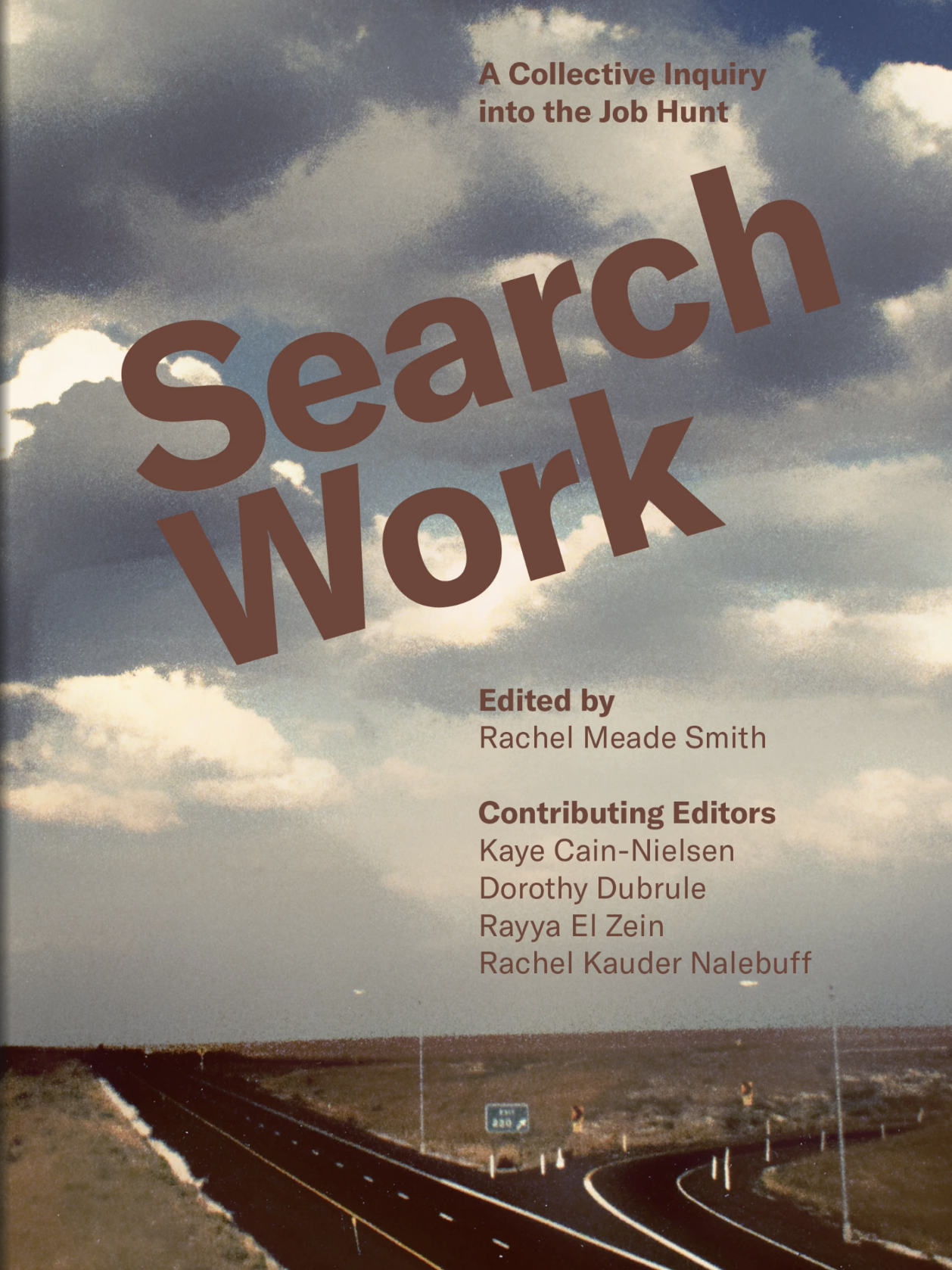
Today's respondent is Rachel Meade Smith. Rachel is a writer, editor, researcher, and civic design worker. Since 2016, she has run Words of Mouth, a free newsletter connecting jobseekers to “humane” work in the creative fields, reaching tens of thousands of readers across the globe. She is the editor of Search Work: A Collective Inquiry into the Job Hunt (OR Books, 2026), a collaborative publication that explores what job seeking can teach us about identity, desire, shame, and hope. She has worked with design studios, non-profits, government offices, museums, and higher ed institutions, almost always to make information make more sense.
Rachel also makes and repair textiles, and explores oral history as a creative research and documentation practice. She has taught mending to skills to hundreds of people around the world as one half of Repair Shop, a tiny learning and design studio focused on maintenance.
Tell us about the first job you ever did for money.
I was a dog walker as a young teen. Mostly I walked my mom’s friends’ dogs around my small town after school. This inspired me and my twin sister to start making dog collars and leashes with our sewing machine, though we knew they were too crappy to sell so we gave them away for free.
Is your current work related to what you studied in school? If so, how? Or, how not?
I studied anthropology in undergrad, then I got a masters in design studies, a field focused on analyzing the way the made world influences lived experience, and vice versa. Most of my (paid) work right now is focused on partnering with qualitative researchers in the civic tech and civic design fields, either to share their insights for a broader public (this involves writing and editing, but also a lot of information and learning design) or applying insights to an actual product (e.g., right now I’m working as a content designer on a redesign of Michigan’s standard driver’s ed manual, which is especially fun because I actually don’t have a license myself). So I guess a lot of my current work is a pretty good intersection of my studies. My side work—the newsletter and related projects on work/jobs/economic opportunity—is less directly related, but is a clear product of being an interdisciplinary person who’s never had the same title twice and really had to figure out how to create opportunities for myself, especially as a "word and idea person" in the design field.
What cultural touchpoint—music, art, literature, etc.—has informed your practice the most? How?
I studied and wrote poetry a lot in college. While I don’t read or write it much anymore, it totally wired me to think critically about every single word, punctuation mark, and line break. Sometimes I resent the way my poetry brain has evolved—I often wish I could be more free, less precise—but I can’t say it hasn’t been very helpful for my day job.
What is the most rewarding aspect of working in your industry? The most challenging?
I'll speak here to my day job: Civic tech/civic design is about improving public sector services with people-centered design and technology, and it's highly dependent on government funding and buy-in. So it's in flux right now for obvious reasons. The values it’s built upon—equity and access, namely—are, as we all know, under attack. So the work feels more urgent than ever, and the future foggier than ever.
Has AI impacted your work? How?
Definitely. I’d say in three main ways:
First is related to what writers and editors are hearing and telling ourselves about ourselves—there’s always been the narrative that it’s a tough field to make a living in, etc., but now we have to contend with even more existential concerns, without knowing if they’re real. Will AI replace us, or make us more valuable, or will things stay basically the same? The economists don’t know, we don’t know, but we have to try to plan our work and our futures amidst this uncertainty anyway. I literally have had friends express shock that I’ve had contracts renewed in the last year, which has not helped.
Second is that I am now regularly asked to edit AI-generated work instead of human work; sometimes I’m told it’s AI-generated and sometimes I’m not. A huge part of my job as an editor has always been trying to gauge what authors are trying to say—I am constantly leaving Google Doc comments saying “What do you mean by this?” or “Does this revision capture your intended meaning?” But now I have this uncomfortable new layer to my work, which is me trying to suss out whether a human was being unclear or an AI was being weird. I worked on one project recently where I spent days trying to clarify AI-generated nonsense that I thought had been generated by a human, because there had been no AI disclosure.
Third is that I do use AI sometimes, mostly as a highly flexible thesaurus. I like to ask it for word alternatives with very specific parameters.
What advice would you give to someone starting a career in your industry?
The civic design/civic tech field is in a time of transition, but I still think it’s one of the only fields where design workers can work on really thorny questions, help real people, get paid fairly + benefits, and have a pretty flexible work life. Up until the second Trump term, I felt very strongly that all the "creatives" sick of working in advertising and big tech should get into it ASAP. It’s a tougher moment now, with the federal design teams having been absolutely gutted, and all those incredible folks now on the market, but work is still being done at the state and local levels, and the field will outlive this moment. Volunteer with US Digital Response!
What are you obsessed with that has little-to-nothing to do with "work"?
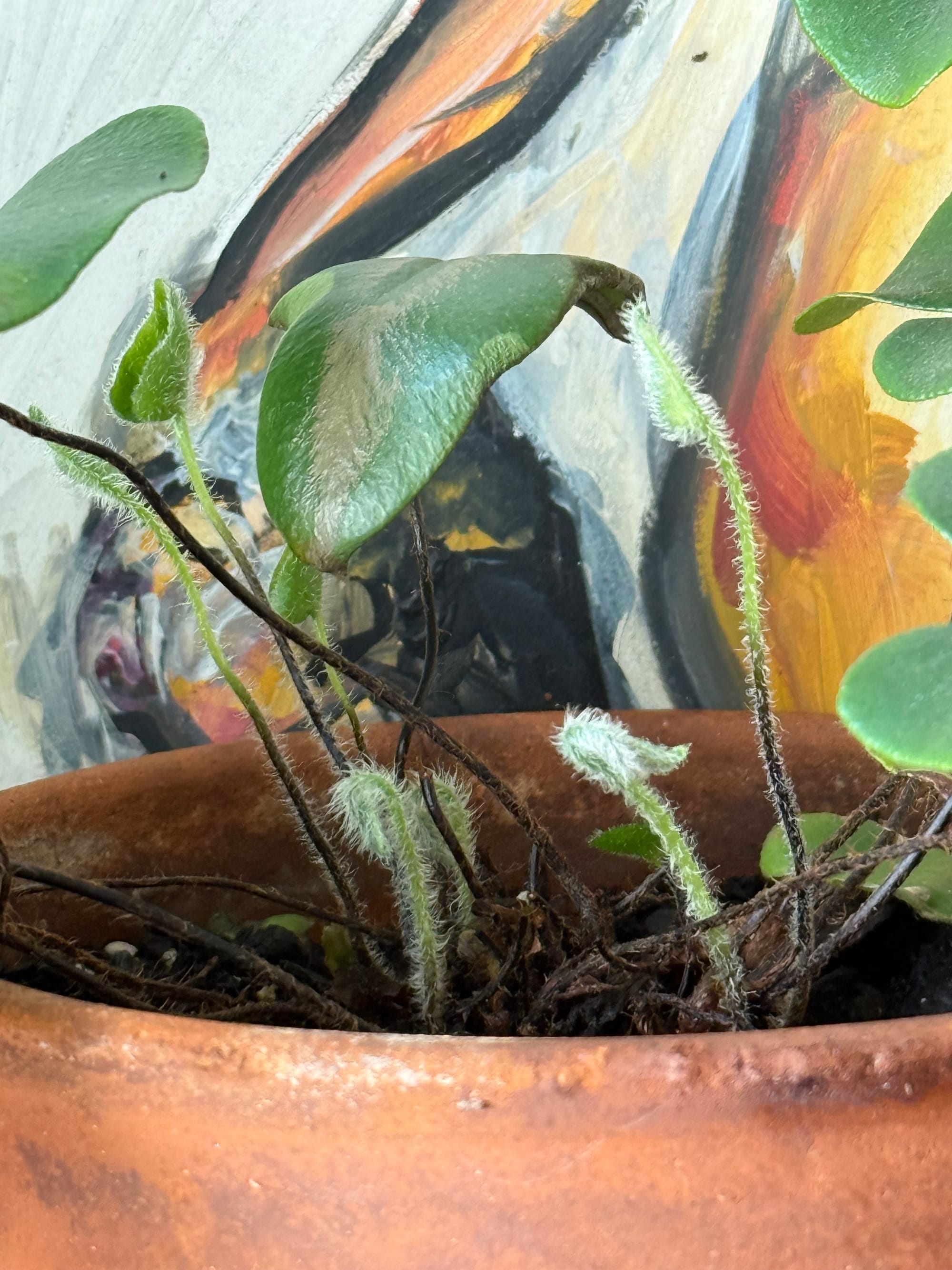
Watching my heart fern sprout new leaves. It’s a really finicky plant that I did not take very good care of over the last year. I recently decided to do better by it and moved it to a spot with ideal lighting conditions and started spritzing it with water twice a day to give it the tropical humidity it likes. Last week it started sprouting up a bunch of fuzzy green fronds all at once, and now they’re really going for it. I had a dream the other night that they all died, so I’m clearly invested at several levels of consciousness.