No. 52: How to See Like a Machine
Welcome to Soft Labor, the namesake publication of Soft Labor, a strategic consultancy for organizations, designers, and the culture industry led by Sarah Hromack-Chan. Did someone forward you this publication? Subscribe, read our archives, or write to us anytime at info@softlabor.biz.
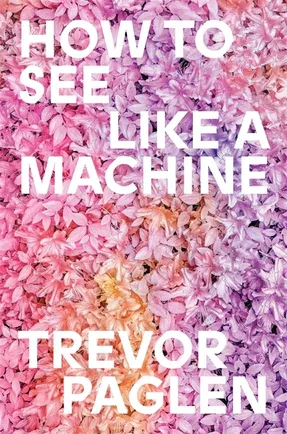
The Brooklyn Rail published our book review of artist Trevor Paglen's newly-released How to See Like a Machine: Images in the Age of AI in its Summer 2026 print and online edition. A writer pal we trust said we sound like ourselves here, which we took as a high compliment in the age of AI-generated prose. The opening salvo:
Public discourse around generative AI is as chaotic as our political present, rife with instability, hearsay, and conflicting information. Will AI ultimately supplant the workforce? What role is it playing in military operations? Is AI already sentient—or will it be? Even our own sense of visual perception can’t be trusted: AI-generated images and memes are deployed deceptively, even nefariously, by our current administration and those well beyond. With each technological advent comes a wave of public and institutional suspicion and so-called “slow adoption.” With AI, however, a slowness to adapt is perilous, a fact that has made people not only afraid, but outright paranoid around the implications of its use—especially knowing that what we see cannot necessarily be believed. Artist Trevor Paglen’s new book, How to See Like a Machine: Images After AI, could be accused of stoking this fire of public paranoia—if what he was writing weren’t true.
Search Results
“Search Results” points toward Soft Labor’s research and reading interests. Follow Soft Labor’s ever-evolving and highly visual research channel on are.na, including links to our selected writings.
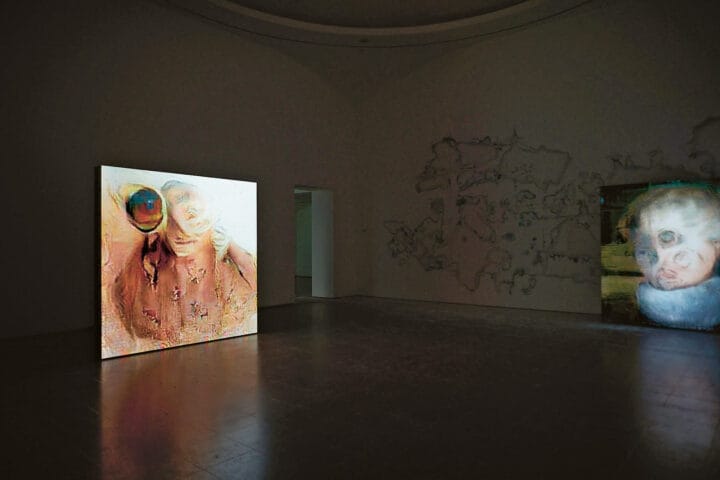
🔗 We sadly missed the opening, but will visit MoMA post haste to see Pierre Huyghe's new exhibition, UUmwelt, which occupies the Sculpture Garden through November. Disclosure: We're Huyghe fans (we even flew to LA to see his first retrospective at LACMA back in 2015). A quick description of Huyghe's process, from the mouth of MoMA: "UUmwelt uses machine learning to explore what it might look like if nonhuman entities could reconstruct our thoughts. Working with a team of neuroscientists in Kyoto, Japan, Huyghe asked a human subject to imagine a set of images while an fMRI scanner recorded their brain activity. An artificial neural network then used the data from the scans to generate thousands of visual interpretations of what they might have imagined." Another AI-driven programmatic coup for MoMA? Let's see. 🖌️
🔗 We're certified academic megafans of sociologist and MIT professor Sherry Turkle, whose writing on the social impact of technology has informed our thinking, writing, and teaching profoundly. Her latest book, Artificial Intimacy: Who We Become When We Talk to Machines, will be published by Little, Brown, and Company at the end of September. As ever, we're here for it. 📱
🔗 We wrote a critical piece about Dutch design studio Metahaven for Frieze a small lifetime ago called "What is Metahaven?" People still ask us about it. Verso has kindly shipped us a copy of Metahaven's new book, The Hard Question of Art: Cognitive Futures; it'll drop in August. We're eager to read it. 📐
🔗 Science invited AI researcher Kate Crawford to reflect on AI's 70th anniversary in "Dartmouth's AI Summer and What Came Next". The piece is unfortunately largely paywalled, but we can imagine the full scope of Crawford's take on the commonly-held origin story of the technology, which mythologizes a group of white men hanging out at Dartmouth. Crawford never fails to deliver a big, thoroughly-informed 'fuck you' to the patriarchy. 🤸♀️
🔗 In "Donna Haraway's Utopian Promise," the Yale Review's Meghan O’Gieblyn revisits Haraway's iconic work in the age of ChatGPT and questions whether it can possibly remain sacrosanct. 👽
🔗 Provocateur Josh Citarella's latest episode of his podcast and YouTube channel, Doomscroll, features beloved artist and academic Hito Steyerl in a conversation that ranged from the ideology of AI, automation, and multipolarity to the rise of reactionary politics across the advanced world. Doomscroll will broadcast live from the Whitney Museum on July 11th as part of the Whitney Biennial. Tickets are required. 📜
🔗 The New Yorker's Kyle Chayka played design critic recently with "The A.I.-Design Aesthetic That’s Taking Over the Internet," while the New York Times put its Styles desk's Callie Holtermann on "The Glitchy, Gloppy Look of Now." Both attempt to capture a set of aesthetic trends that are rooted in AI outputs. Our issue with mainstream news media's design criticism is that it treats not-so-emerging visual phenomena as breaking news. Necessary brand positioning—remember the mid-2010s The Times is On It! Twitter account?—but nevertheless, an irritating tactic. 🌀 NB: We do adore Lily Kuo and Pei-Lin Wu's piece on Chinese Dreamcore that ran in yesterday's Times.
🔗 We've written about the (brand consultancy and forecasting studio) Nemesis's workshops before; we took last year's Autonomous Strategy I and II and found both to be generally excellent and also fun. The studio's Autonomous Strategy Positioning Intensive starts on July 15th. Recent Nemesis memos Tasteslop and Grey Ocean Strategy were 🔥, and we recommend them (and all Nemesis memos) as cultural artifacts. 🗒️
🔗 We've been World Cupping nonstop! N+1's web vertical, GOOOOAAAL, is providing the most compelling (and entertaining) World Cup social commentary we've read. We truly wished to take David Goldblatt's World Cup 2026 seminar through British Equator magazine, which ran back in May and June. Time evaded us. A both athletically and politically tuned-in pal recently suggested we read Ryszard Kapuściński's 1978 book, The Soccer War. Oh, and Best World Cup 2026 Jersey goes to Belgium's Away kit, which was loosely modeled on the work of Magritte and is totally sold out. ⚽

🔗 Pastry chef Tanya Bush wrote an entertaining little essay for I-D and Cake Zine on (overpaying for) an Issey Miyake Pleats Please set that whimsically—in the unfortunate way Pleats Please print designs can unfortunately be whimsical— featured a recipe for cherry buns. The piece closes with a recipe for what Bush calls "Pleats Please Farmhouse Cake." This is why subject experts should write beyond their domains. 🍰
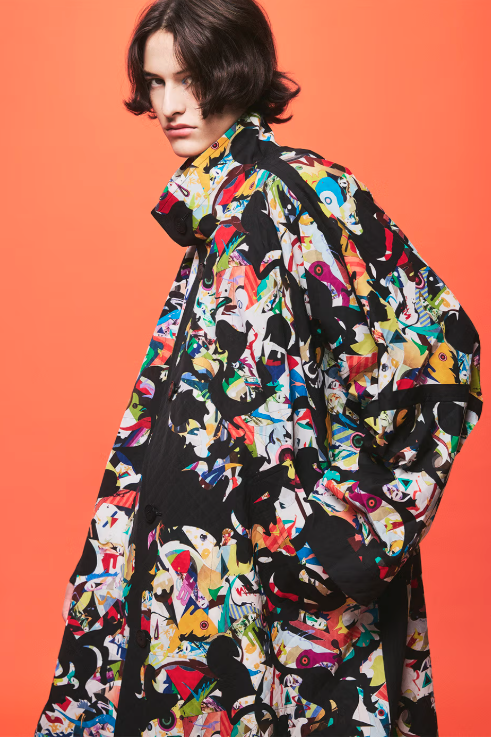
🔗 Speaking of Issey, A-POC ABLE ISSEY MIYAKE and Tomokazu Matsuyama have unveiled the TYPE-XII Tomokazu Matsuyama project, a collaboration that translates the Brooklyn-based artist’s paintings into wearable textiles. 🧵
🔗 Balenciaga joined Substack. We're interested to see what an eminent fashion house does with a bot-filled publishing platform. 🕳️