No. 53: Cognitive Futures
Welcome to Soft Labor, the namesake publication of Soft Labor, a strategic consultancy for organizations, designers, and the culture industry led by Sarah Hromack-Chan. Did someone forward you this publication? Subscribe, read our archives, or write to us anytime at info@softlabor.biz.
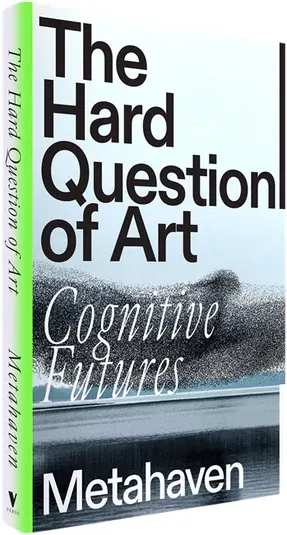
We got our hands on Metahaven's new book, The Hard Question of Art: Cognitive Futures—thanks again to Verso—and are currently reading its series of essays with titles such as "Cause and Affect," "Mirror Neurons," and "Non-Narratable Worlds." Our issue with Metahaven has always been, in part, about how they deploy humor in the work. From our piece for Frieze, written a decade ago:
For all of their engagement with power structures and other systemic failings, Metahaven can’t allow their work, in practice or in scale, simply to be what it is; they cannot resist telling a visual joke through design and then explaining it again, as if to assure themselves of the punch line. At times, in fact, they could even be perceived as coming close to undermining their own critical potential in a feedback loop of self-description and analysis.
We're still reading, so for the moment we will simply say this: Metahaven— Vinca Kruk and Daniel van der Velden—have grown in the intervening years between now and when we last wrote about them. We did, too. Metahaven's work feels much less self conscious than it once did to us. The Hard Question of Art: Cognitive Futures is a series of critical essays that grapple honestly—and yes, cleverly—with questions that should concern anyone who thinks about art and what we'll call the aesthetics of cognition, whatever those may be.
Search Results
“Search Results” points toward Soft Labor’s research and reading interests. Follow Soft Labor’s ever-evolving and highly visual research channel on are.na, including links to our selected writings.
🔗 "What AI Will Do to Art" is a recent interview with artists and AI exponents Holly Herndon and Mat Dryhurst in The Atlantic, written on the occasion of Strange Rules, an exhibition they co-curated with Hans Ulrich Obrist and Adriana Rispoli at Berggruen Arts and Culture's Palazzo Dideo in Venice. Spencer Kornhaber writes: "But when I tried to get them to describe their visual style, they seemed taken aback, like they'd never thoughts about it. 'The aesthetic is more of a product of the process,' Dryhurst said, and the process usually involved feeding AI models information drawn from their lives and then instinctively messing around with the prompts. Software had distilled these two people into a rather lovely sensory language. I wondered what it would do for others." 👾
🔗 While Paul Chan's "Content: A Postmortem," from October Issue 196, is paywalled, we got a hold of it. Chan writes: "A fifteen-year-old casually told me that culture is online and really nowhere else. I felt dumbstruck by the simplicity of his insight, which I suspected is true but could not bring myself to agree with. Why? Because if culture exists predominantly online, where virtually all forms of expression are viewed as content, then does this mean that things and experiences that, for whatever reason, cannot be turned into content might as well culturally not exist? And what about art, as a historical entity and idea? Is it simply content too? And if art is not just content, how does it stand apart? How does it resist being mere content? Is it even worth resisting? And what is gained by this resistance for those who make it and those who caretake it?" Fine questions, all. 🧠
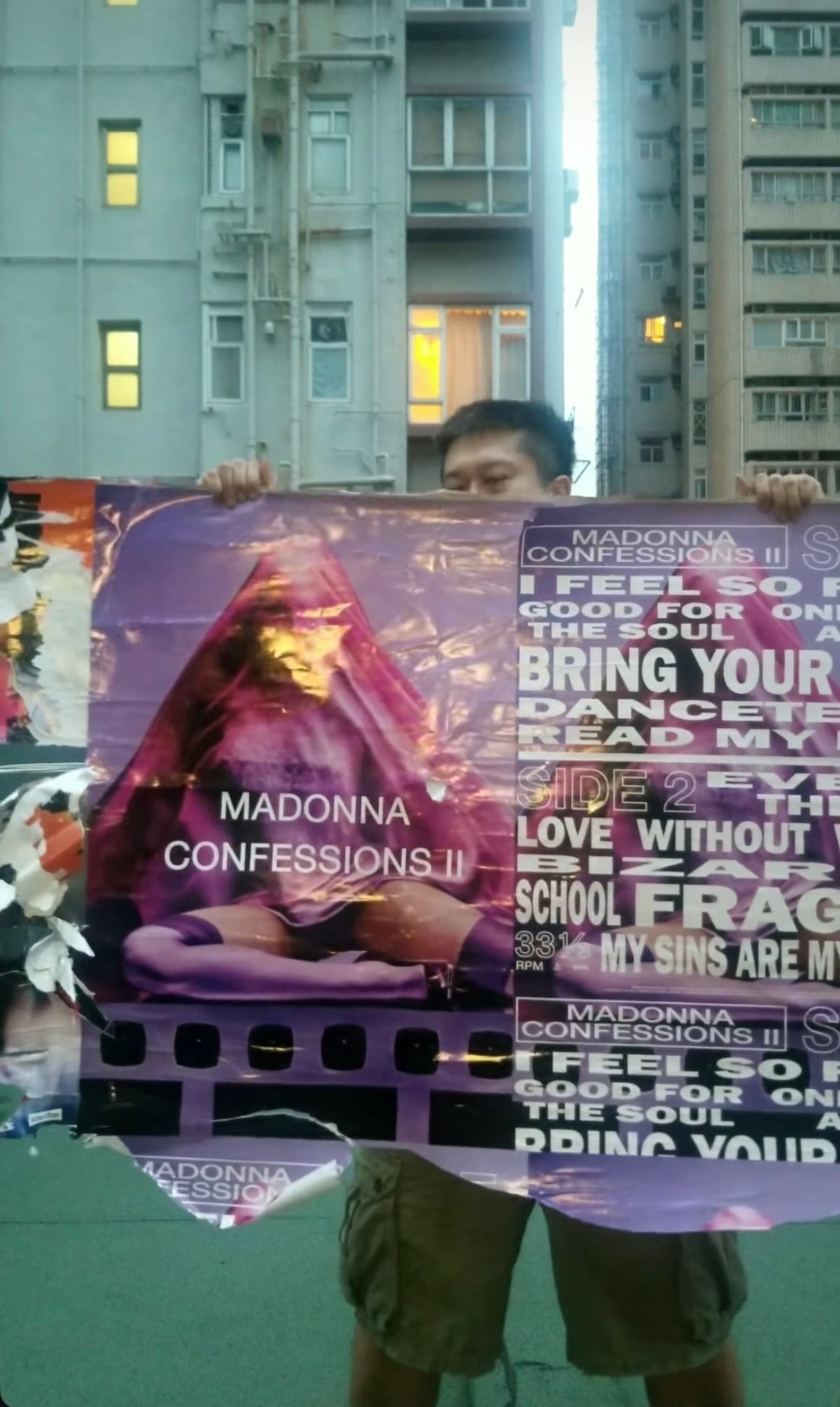
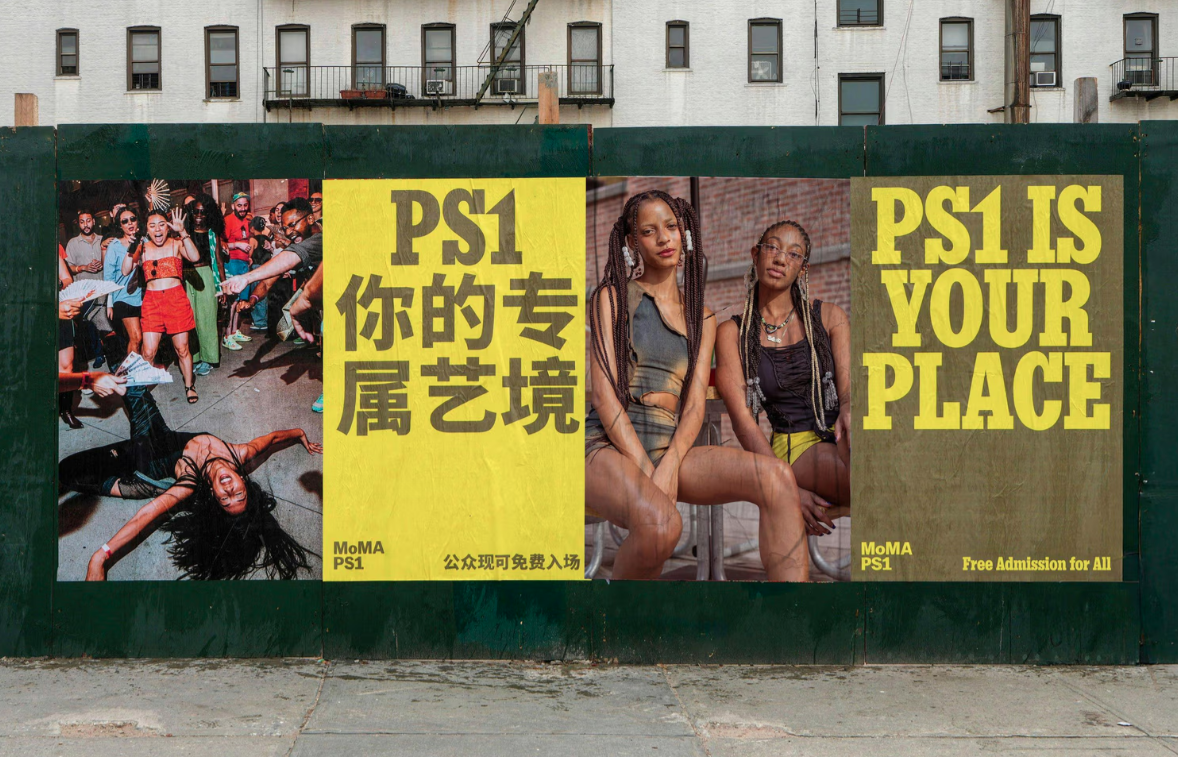
🔗 A few pop cultural design notes: We, like so many, are obsessed with Special Offer, Inc.'s full campaign for Madonna's new album, Confessions II. (Special Offer, Inc. is the progenitor of the grossly, yet perfectly green look of Charlie xcx's 2024 studio album, Brat, which went so viral that we once saw a massive Urban Outfitters product display devoted to the acid green album.) We also noted Porto Rocha's new identity for Tinder, as recently written about by Elizabeth Goodspeed for It's Nice That. Porto Rocha's new campaign for MoMA PS1, however, is the real standout for us given our own work in the cultural sector. "PS1 is Your Place" feels like a natural claim, one that speaks to the nature of the museum's location in (wildly diverse) Queens—and its ability to pull in local audiences, which is a feat yet an achievable one given its legendary programming (Warm Up! Greater New York!) and proximity to public transportation.🩷
🔗 We're assuming a given mindset for a project we're currently working on by reading mostly-fictional writings about intentional communities, communes, and cults. (More on said project later.) T.C. Boyle's Drop City is topping the list, as is Emma Cline's The Girls; we're also revisiting Joan Didion's iconic Slouching Towards Bethelem. The New Yorker just published Hua Hsu's piece on the reissue of Shiva Naipaul's 1980 book, Journey to Nowhere, which reported on the Jonestown Massacre. A bookseller recommended Aisline Rawle's The Compound and Amanda Montell's Cultish: The Language of Fanaticism. We're even skimming a book on New York City loft living (with a forward by David Harvey!) written by Sharon Zukin and first published in 1982. We welcome further reccos on these subjects, which have always strangely enthralled us! 🌼
🔗 Jed Perl asks why the Metropolitan Museum of Art sold its space to Big Fashion in this piece for the New York Review of Books. He deems the museum's current show, Costume Art, an "infomercial for the fashion industry." Crabby! 👠
🔗 We're fascinated by prediction markets and their implications for culture. A few recent bets from Kalshi: Will Basquiat's artworks break auction records this season?; Most expensive artwork sold this year; Will Andy Warhol's artwork break auction records this season? The art market is clearly still emerging as a subject for speculation on Kalshi, but give it time. Remember, folks: Like the drug trade, the art market is completely unregulated!💰
🔗 Is Ambient Music Evil? asks a new, excellent essay by Blackbird Spyplane. We're personally listening to the Comme des Garçons's 1988 Homme Plus soundtrack by Seigen Ono, which isn't exactly ambient per se, but is certifiably bananas (in a good way). 🔊