The Soft Labor Questionnaire: Mike Tully
Welcome to Soft Labor, the namesake publication of Soft Labor, a strategic consultancy for organizations, designers, and the culture industry led by Sarah Hromack-Chan. Soft Labor is a publication about creative labor—what it is, what it looks like, and how it has and will continue to change. Did someone forward you this publication? Subscribe, read our archives, or email us at info@softlabor.biz.
The Soft Labor Questionnaire, is simply that: A brief series of questions we’ve asked comrades in the field to answer about their own working experiences. Would you like to respond to the Soft Labor Questionnaire? Go right ahead and do so.
Today's respondent is Mike Tully. Mike is an independent graphic designer based in New York City. He works with artists, architects, publishers, and institutions on editorial, exhibition, identity, and research-driven design commissions. He has worked as Design Director for The Brooklyn Rail and with Apple, The New York Times, Wolff Olins, Lincoln Center, and various New York-based studios. He has been an artist-in-residence at the Internet Archive, San Francisco, and a design fellow with the Center for Urban Pedagogy, New York. His work has been recognized by the Type Directors Club, AIGA, D&AD, and is held in the collections of De Appel Amsterdam, the Center for Book Arts, Yale University, and Columbia University, among others. He holds an MFA from Yale School of Art and a BFA from Parsons School of Design. He is currently Visiting Assistant Professor at Pratt Institute.
Tell us about the first job you ever did for money.
I worked for a music school. I handed out passes for free lessons in an instrument shop around the corner. This involved a lot of downtime talking with musicians. I was around fourteen at the time.
Is your current work related to what you studied in school? If so, how? Or, how not?
Yes. I studied graphic design in undergraduate and graduate school and am actively designing and teaching in the field.
What cultural touchpoint—music, art, literature, etc.—has informed your practice the most? How?
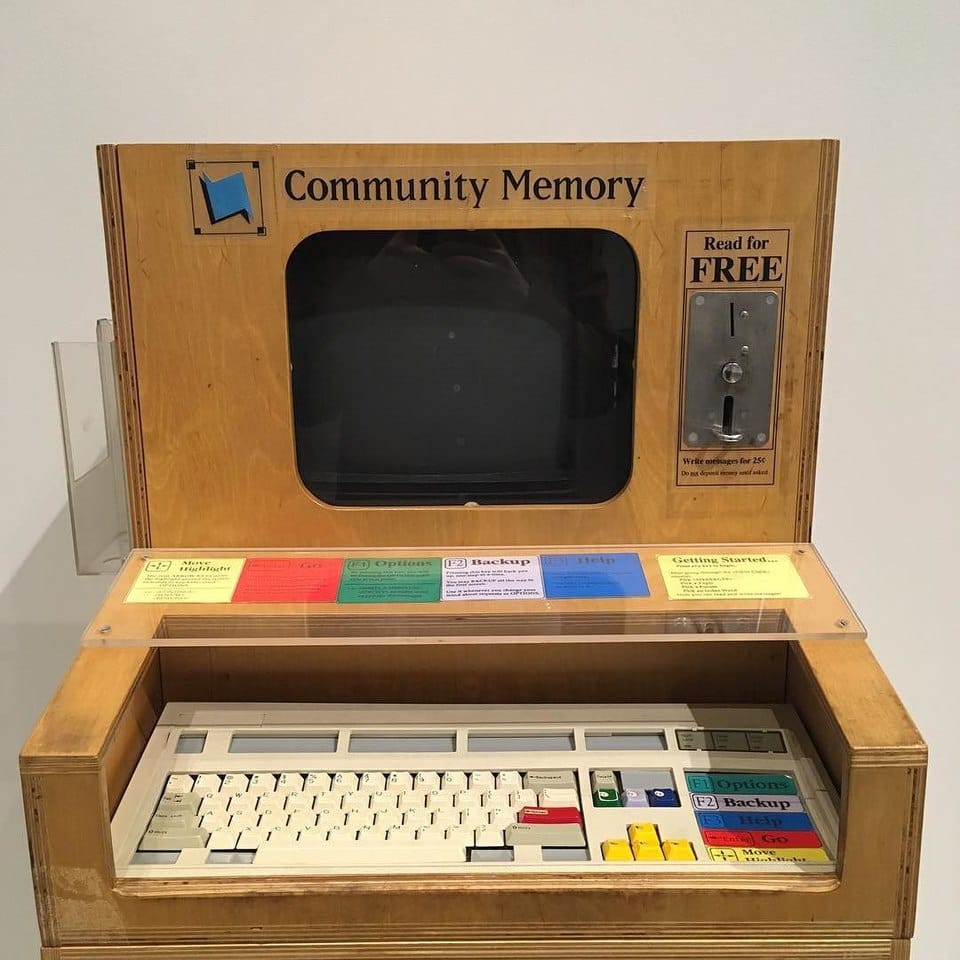
How to pick just one? In the broadest sense, probably publishing. In my free time in undergraduate, I was digging through older writings and design publications like Emigre and Dot Dot Dot, tracing discourse in the design field to the moment I was in. After getting my start as a designer, I ended up working at a few different publications like The New York Times and The Brooklyn Rail and now I frequently take on editorial design projects. As an educator, I’m often putting together reading lists for different courses. Since 2020, I’ve been working on a long-term research project about Community Memory, the first public computerized bulletin board system. I appreciate how publishing as a practice and a community can have both a lot and/or little-to-nothing to do with design.
In a more specific sense, and to untether myself generationally for a moment, Neil Young has always been an influential artist for me. Learning about his obsession with finding the right sounds and using certain kinds of equipment to attain desired tones to me is all about the mastery of craft in the pursuit of expression. His willingness to experiment with output over a very long trajectory is a very admirable thing. Most of all though, I think his work embodies a harmony between precision and looseness, which is a very difficult balance to strike and something I think about a lot in regard to my own work.
What is the most rewarding aspect of working in your industry? The most challenging?
There can be a lot of satisfaction in seeing something you’ve worked on circulate into the world in ways that might surprise you as it takes on its own life, especially over time. Maintaining focus on a set of interests, questions, or practices—and embedding those into the work as it's developing—can often be the most challenging and the most rewarding.
Has AI impacted your work? How?
The ways in which AI is fundamentally changing the terrain of design work are undeniable and obvious. There are ways that I currently find AI useful in my workflow as an individual, which I would say is modestly applied in small doses, although I’m interested in more novel applications of it. I mainly find it helpful to free up time to focus on work that is more of a priority or that I enjoy more. Although in other contexts, for every broader case to automate the tedium of some previously laborious process, there is potentially a younger designer out there who might have used that work to hone their craft or skill. Like a lot of people, I question where the impact of AI will leave a younger generation of designers trying to get their foot in the door. Not to mention the ethical, moral, and environmental questions in regards to its application.
What advice would you give to someone starting a career in your industry?
Find people that you enjoy working with and work with them for as long as possible. Be open to being proven wrong about your assumptions, no matter how strongly you hold them. If you’re interested in pursuing graduate school in design, work in the field first for a little while to figure out what you like, what frustrates you, and what you might want to continue to explore in your own way.
I often see students and recent grads emulating older, more established designers in a number of ways—in how they present themselves professionally, the style(s) of work that they make, where they worked or went to school, and so on. Developing comfort in your own taste, interests, and experiences can be incredibly empowering over time. It’ll keep you on the scent of what you might really be after.
What are you obsessed with that has little-to-nothing to do with "work"?
Garment deconstruction videos. They’re captivating to me. And my cat.