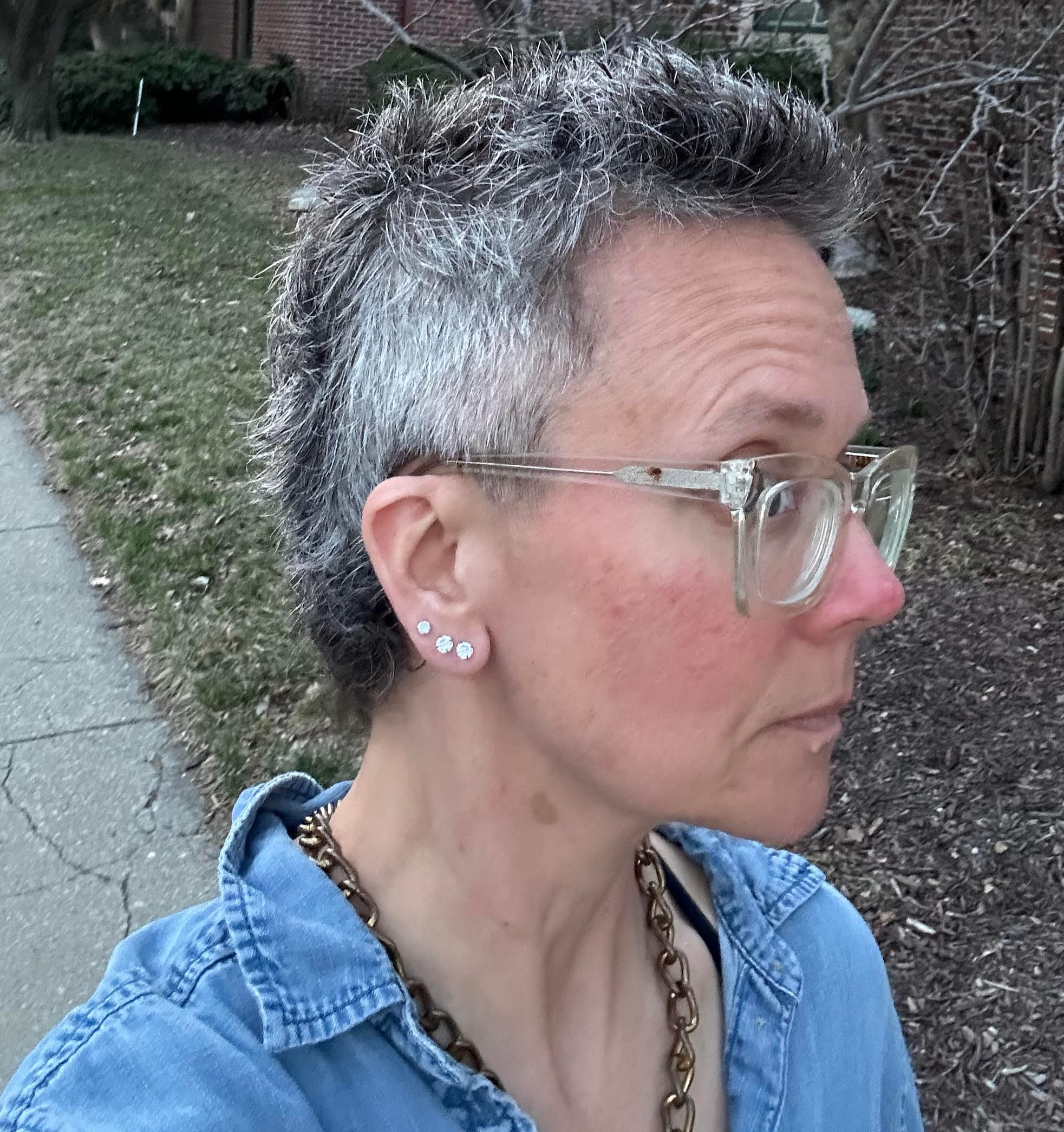
The Soft Labor Questionnaire: Eve Batey
Welcome to Soft Labor, the namesake publication of Soft Labor, a strategic consultancy for organizations, designers, and the culture industry led by Sarah Hromack-Chan. Soft Labor is a publication about creative labor—what it is, what it looks like, and how it has and will continue to change. Did someone forward you this publication? Subscribe, read our archives, or email us at info@softlabor.biz.
The Soft Labor Questionnaire, is simply that: A brief series of questions we’ve asked comrades in the field to answer about their own working experiences. Would you like to respond to the Soft Labor Questionnaire? Go right ahead and do so.
Todays respondent, the first in 2026, is the inimitable Eve Batey. Eve is a longtime journalist and current contributor to and weekend editor for Vanity Fair. Eve's career began as a co-founding writer and lead editor of SFist, the San Francisco arm of the then-robust Gothamist network. In 2006, she took things full time at the SF Chronicle, where she was their first blogging and interactive editor; a year later she was the paper's first deputy managing editor for online. Eve has had a lot of journalism jobs in the years since, including editing Eater San Francisco throughout the pandemic. Gotta love the timing!
Aside from her work with Vanity Fair, she is the San Francisco editor for lifestyle newsletter FOUND. Eve is also the co-founder of Best Evidence, a true crime analysis newsletter and website. Unrelated to typing, she is the co-owner of Avenues Dry Goods, a shop in San Francisco that specializes on vintage goods and the work of local artists and craftspeople.
Tell us about the first job you ever did for money.
Over the table, it has to be my high school job at the Cinnabon inside Greenwood Park Mall in Indiana. This was the late 1980s, and Cinnabon staff was basically food court royalty.
Is your current work related to what you studied in school? If so, how? Or, how not?
Not really! I was the EIC of my middle school newspaper, but I didn't study journalism or writing in high school or either of the colleges out of which I dropped. That said, some of the best reporters and editors I know didn't study journalism at all! It's quite likely that a broad education and a variety of life experiences serves a reporter better than focused vocational training.
What cultural touchpoint—music, art, literature, etc.—has informed your practice the most? How?
I think a lot about how much the perception of writing differs from the actuality. The number of people who say to me "oh, you're a writer, is must be so great to sit in a cafe all day..." That's how I know their frame of reference is "The Artist's Way" or its ilk, one of those manuals for creativity.
In real life—and I suspect this is true for many pursuits that get tagged as "creative"—writing is work, you do the legwork then sit down, make a plan, and start typing. But people prefer the fantasy of magical inspiration! All this to say that I always know I'm dealing with a real one if they mention Stephen King's "On Writing." First, because that means they're not a fancy-pants poser too fancy to admit they read King. And second, because if you read his book, understand that writing mostly involves just putting in the hours, then still want to do it, you likely have a chance to make this a career.
What is the most rewarding aspect of working in your industry? The most challenging?
Being part of polite society means we don't ask each other about a broad swath of subjects; add to that my upbringing in Indiana, where it's preferred that one never discusses anything of substance to avoid discomfort or tension. So having a job where I regularly get to ask anyone anything is remarkably freeing!
In terms of challenges, there's the internal—I'm a freelancer, so I have to self-start, and some days it's harder to do that then other. The external challenge will be addressed in the next question!
Has AI impacted your work? How?
Yes, in so many ways. I'll lay out two: First, there's Google's AI summary at the top of every search, which killed traffic to most news, culture, and information websites overnight. You can directly chart the wave of media layoffs that followed that tool's rollout.
Next, there's just the sheer volume of AI slop masquerading—at times, quite convincingly—as news. Just one example: Hoodline was once a respected network of city-based news sites, it's now almost completely AI-generated rewrite (often incorrectly) of the work of actual journalists, even as it bills itself as "Originally Reported, Hyperlocal Neighborhood News." It even bylines each piece with a fake name and photo! It's not thoughtful aggregation, opinionated or voicey blogging, or anything other than flavorless, pre-masticated sludge. It bums me out.
What advice would you give to someone starting a career in your industry?
We'll assume for the sake of argument that you're a good writer with decent reporting skills, OK? So from there, be reliable, punctual, and on deadline. Push back on edits that inject error or confusion, but don't be precious or too picky about the rest.
Think long and hard about your relationship with social media—if you post a lot, ask yourself why you're working for those oligarchs for free and what value likes and shares get you.
Read books (yes, BOOKS) that aren't within your beat, that's where you'll get some of your best ideas (and it'll give you an edge over your competition that solely focuses on their interest area).
If you fuck up, admit it, apologize, and fix it. If an editor, reader, or rando sends you a message that makes you furious, do not immediately respond.
Don't fall into the trap of thinking that because you have a desirable job, you need to keep it. Yes, you need to pay the bills, don't just quit and hope you'll win the lottery! But working with assholes, or for a place that makes you miserable, isn't worth it. Make an escape plan and stick with it, don't settle into that velvet coffin.
(I have broken all these rules and have survived, but my path would have been easier if I hadn't.)
What are you obsessed with that has little-to-nothing to do with "work"?
I got seriously into power lifting after subscribing to Casey Johnston's She's a Beast newsletter. I also spend a lot of time thinking about sighthounds, and live with two: a greyhound named Ellie and an IG named Murphy.