The Soft Labor Questionnaire: Brian Sholis
Welcome to Soft Labor, the namesake publication of Soft Labor, a strategic consultancy for organizations, designers, and the culture industry led by Sarah Hromack-Chan. Soft Labor is a publication about creative labor—what it is, what it looks like, and how it has and will continue to change. Did someone forward you this publication? Subscribe, read our archives, or email us at info@softlabor.biz.
The Soft Labor Questionnaire, is simply that: A brief series of questions we’ve asked comrades in the field to answer about their own working experiences. Would you like to respond to the Soft Labor Questionnaire? Go right ahead and do so.
Today's respondent is Brian Sholis. He is a longtime editor, writer, and curator who currently works with the technology company Notion, A24 Films, Inventory Press, the design office Frontier, Hariri Pontarini Architects, and others. He is married to the artist Julia Dault, with whom he runs the community art studio Hot Pizza (and is raising two kids).
Tell us about the first job you ever did for money.
At age fourteen I began working in the office of the ice rink owned and operated by the Chicago suburb where I lived. For three years I answered phones, registered students for classes, booked ice time for hockey teams and skating clubs, and otherwise helped keep things running smoothly.
Is your current work related to what you studied in school? If so, how? Or, how not?
I have a BA in Urban Studies and Public Policy and an MA in American History. I maintain my deep interest in cities and history, but what I do now is only tangentially informed by those subjects, when I work on a book or other manuscript that touches on urban or historical issues. In both undergraduate and graduate settings, I was something of a lone wolf and didn’t draft in the wake of any professor. But I appreciated having years and years when I had access to resources that helped me indulge my autodidactic streak. Some of the database-sleuthing and fact-finding skills I picked up in those environments have served me well since.
What cultural touchpoint—music, art, literature, etc.—has informed your practice the most? How?
I’ve taken to saying that my intellectual sensibilities were shaped by simultaneously discovering the internet (via BBS chat rooms) and punk rock (via Operation Ivy and Lookout! Records) at the same time, circa 1993–94. Ever since, I’ve used computers to seek out pockets of independent culture, no matter my evolving interests.
Thinking about this question again, though, I’d say that literary review-essays also shaped me profoundly. When I moved to New York in 2001, I had subscriptions to the New Yorker, the New York Review of Books, the London Review of Books, and other publications, and what I read in those pages sent me to the basement of Strand Books in search of rich and sustaining essay collections—still my favorite type of book to buy or borrow and read. I never had the patience or talent to regularly turn out four-thousand-word book reviews, but I loved (and still love) the form.
What is the most rewarding aspect of working in your industry? The most challenging?
Because I work for myself, I’m continually forging new relationships and being stimulated by new projects (and the new problems they pose). There is no “average day” for me, which works well for my brain and personality.
The challenge, of course, is the challenge of all freelance lives: finding the balance between seeking work, doing work, and maintaining a life beyond work. Even after more than twenty years of freelancing and nearly a decade of working mostly for myself, I sometimes struggle to keep at bay the scarcity mindset that can so easily upend that balance.
Has AI impacted your work? How?
Two years ago, my grim joke was that I’d have a career so long as the LLMs’ context windows couldn’t swallow the entire Chicago Manual of Style. That’s now trivial for the latest models; still, I’m relieved to know that, for now at least, my experience and skills remain needed. I use LLMs to varying degrees as I work with different clients, but the majority of what I use them for is boring grunt work: reformat this text; update the status of X tasks in Y database; summarize this action items from this video call.
What advice would you give to someone starting a career in your industry?
Whenever I talk to students, I always say that having a successful career in the arts is partly talent and partly about being nice and showing up. The percentages I cite change—today I’ll say it’s 58% talent and 42% being a good person—but too many people completely forget the latter part of the equation. Support people you like and people whose work you admire. Keep close those who fit into both categories, and remain open-minded enough so that list can grow as you age and change.
What are you obsessed with that has little-to-nothing to do with "work"?
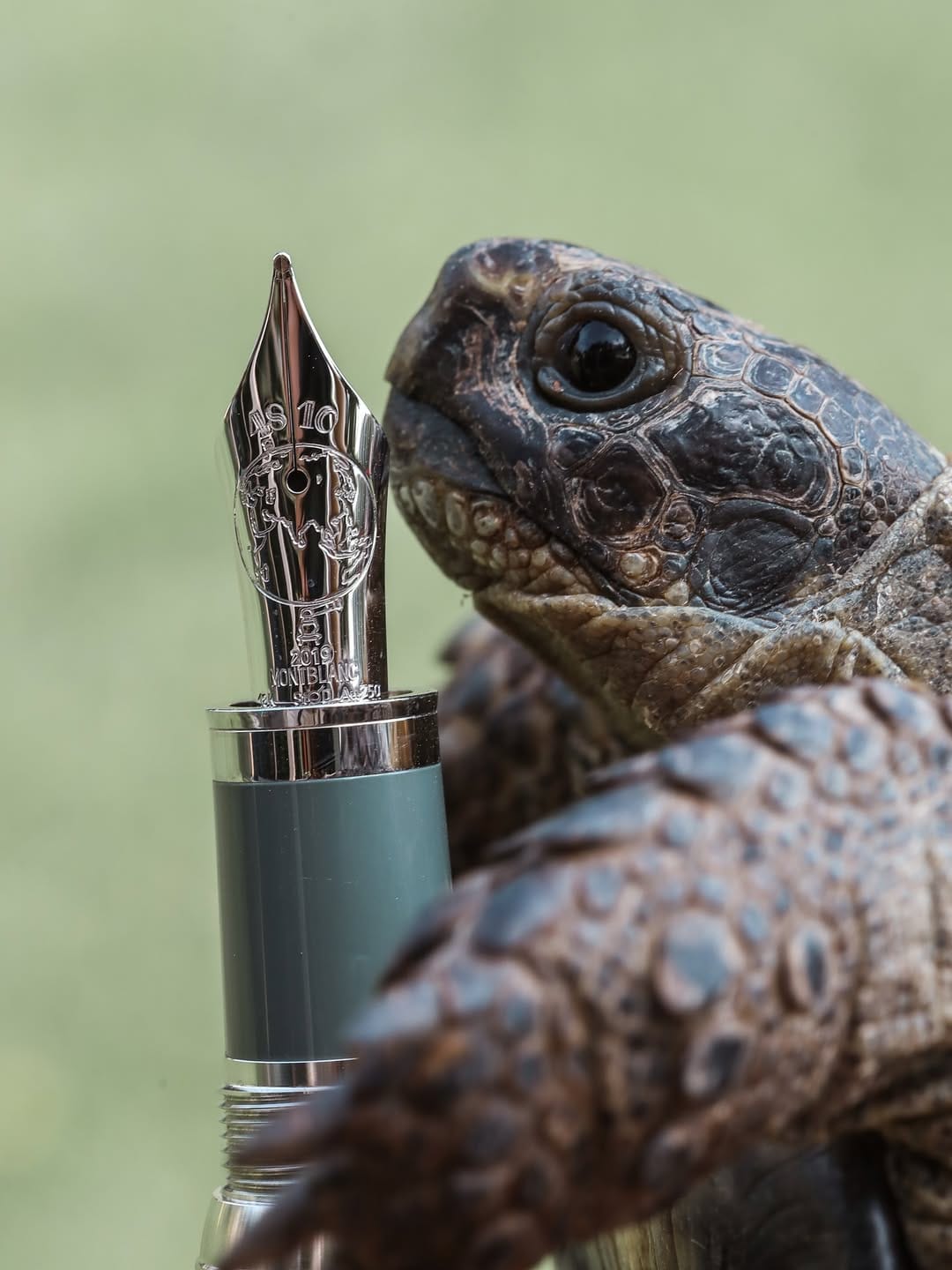
Last spring, I used a fountain pen for the first time. I’ve always been a stationery nerd, and I’ve learned as much about pens in the last six months as I learned about any subject in school. I now go to monthly meetups; am part of a 100-person local WhatsApp group chat and several Discord communities; and own a dozen pens and let’s just say more than a dozen bottles of ink.
This obsession has helpfully reoriented me away from doing everything through my computer and phone. It has given me an appreciation for forms of artistry, craftsmanship, and engineering that I would never before have even considered. And it has given me rituals—cleaning and refilling pens; swatching new inks; writing in a journal—that I enjoy deeply. It has helped me to realize that while I have always had passionate and esoteric interests, I don’t think I have ever really had a hobby. It’s nice to have one now.